
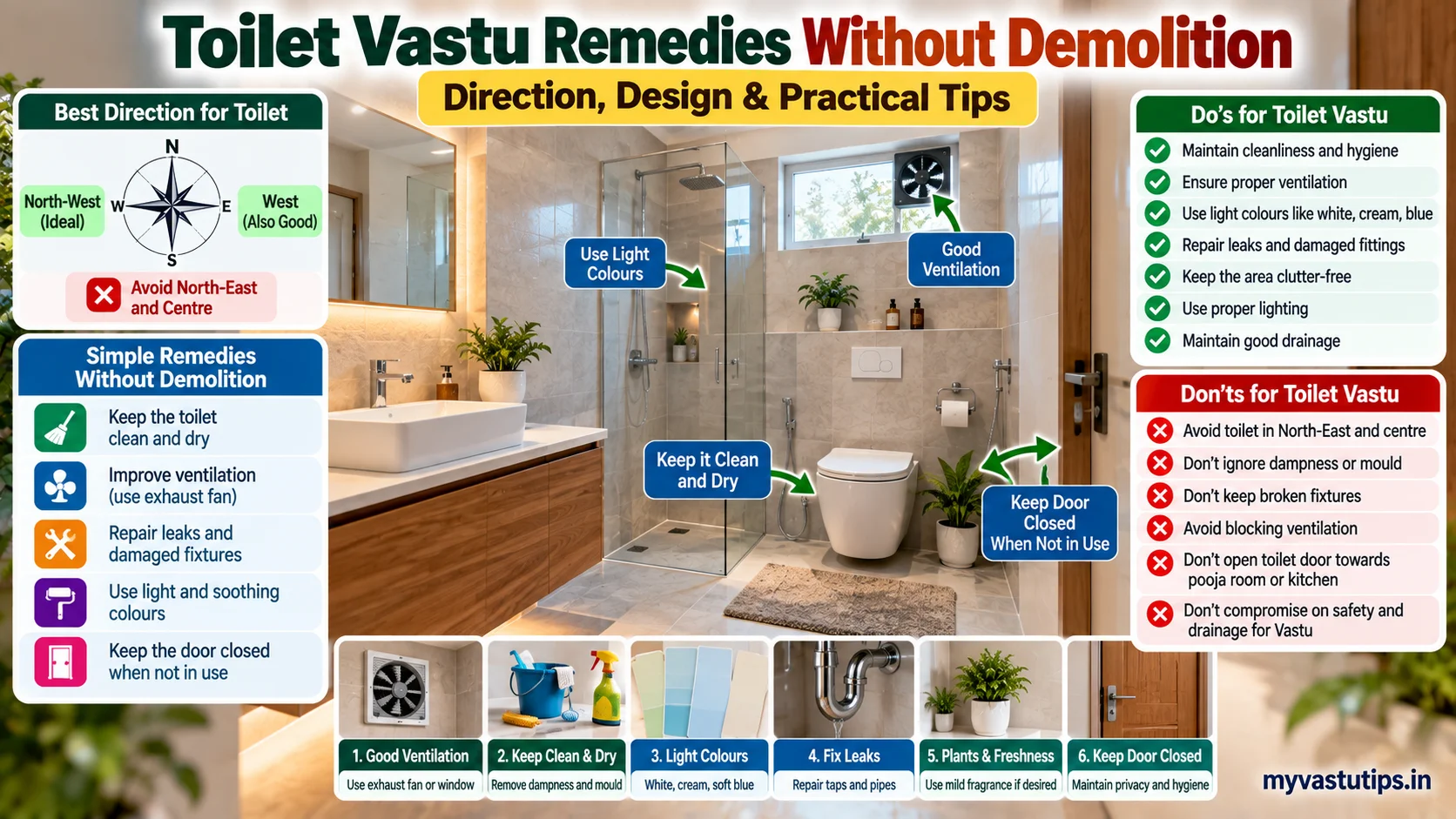
Toilet Vastu Remedies Without Demolition are traditional ways to manage bathroom and toilet placement concerns without breaking walls or rebuilding the space. This can be useful in existing homes, apartments and rented properties where structural changes are difficult. For a wider room-by-room planning overview, see our Vastu basics for home guide.
Traditional Vastu gives importance to the direction and placement of toilets, but practical factors such as drainage, ventilation, waterproofing, hygiene and safe construction should always come first.
Why Toilet Vastu Matters
In traditional Vastu, toilets are associated with waste removal and are therefore given specific placement preferences. However, an unfavourable location should not automatically be considered a cause of health, financial or family problems.
For an existing toilet, the most useful approach is to improve cleanliness, ventilation, maintenance and overall comfort while following Vastu preferences where practical.
Common Toilet Vastu Concerns
Some toilet placements are traditionally considered less suitable:
- Toilet in the northeast zone.
- Toilet in the central area of the home.
- Toilet in the north or southwest, depending on the Vastu tradition being followed.
- Toilet door directly facing a pooja room or kitchen entrance.
- Bathroom sharing a wall with a bedroom headboard when an alternative arrangement is practical.
These are traditional Vastu considerations, not guaranteed indicators of problems in a household.
Best Directions for Toilet as per Vastu
Northwest and west are commonly preferred for toilets in traditional Vastu. Some Vastu practices also mention the southern part of the southwest as an alternative in specific layouts.
- Northwest: Commonly considered a suitable location.
- West: Often used when it fits the overall floor plan.
- Southwest: Usually avoided in traditional Vastu, especially the core southwest area.
- Northeast: Commonly avoided for toilets.
When building a new toilet, drainage, plumbing access, structural requirements and ventilation should be checked along with Vastu preferences.
Toilet Vastu Remedies Without Demolition
When the toilet cannot be relocated, focus on simple changes that improve the space without structural work.
1. Keep the Bathroom Clean and Dry
Cleanliness is one of the most practical improvements. Remove dampness, mould, stains and unpleasant odours regularly.
2. Improve Ventilation
Use an exhaust fan or suitable window to remove moisture and stale air. Good ventilation is especially important in bathrooms with limited natural airflow.
3. Repair Leaks and Damaged Fixtures
Repair leaking taps, pipes, toilet fittings and cracked surfaces quickly. Waterproofing and drainage should also be maintained properly.
4. Use Light Colours
Traditional Vastu commonly suggests light shades such as white, cream and soft blue for bathrooms. Choose colours that also make the room feel clean and spacious.
5. Keep the Door Closed When Practical
Keeping the bathroom door closed when it is not in use can help maintain privacy and reduce the movement of moisture and odours into other rooms.
Remedies for Specific Toilet Directions
Existing homes cannot always follow ideal Vastu placement. In such cases, the following traditional and practical measures can be considered.
Toilet in Northeast
If the toilet is already in the northeast, avoid expensive changes based only on fear. Keep the room especially clean, dry, well ventilated and brightly lit. Traditional symbols or other Vastu items may be used according to personal belief.
Toilet in the Centre
Structural relocation may not be possible. Focus on excellent ventilation, moisture control, cleanliness and good maintenance. Avoid using the area for unnecessary storage.
Toilet in North
Keep the area clean and organised and make sure there are no leaks or drainage problems. Good lighting and ventilation are more useful practical improvements.
Toilet Door and Commode Placement
Door and fixture placement should support privacy, easy movement and proper ventilation. Traditional Vastu may also recommend specific orientations, but practical usability should not be compromised.
- Keep the toilet door easy to operate.
- Avoid blocking the bathroom entrance with fittings or storage.
- Position the commode so there is sufficient room for comfortable use.
- Maintain clear access to plumbing and maintenance points.
Toilet Design Tips as per Vastu
For a new bathroom or renovation, combine traditional Vastu preferences with sound building practice. If several rooms are being updated together, our home renovation Vastu guide covers broader planning considerations.
- Provide proper waterproofing.
- Install an effective exhaust system where required.
- Use non-slip flooring suitable for wet areas.
- Provide adequate drainage slope.
- Keep electrical fittings safely away from wet areas.
- Use easy-to-clean wall and floor finishes.
Plants, Fragrance and Decorative Items
Small decorative additions may make a bathroom feel more pleasant, provided they are suitable for the environment.
- Use low-maintenance plants only where sufficient light is available.
- Choose mild fragrances if desired.
- Keep decorative items limited and easy to clean.
- Avoid overcrowding a small bathroom.
Salt bowls, pyramids, metal strips and similar Vastu products are traditional remedies. They should be treated as matters of personal belief rather than scientifically proven methods for correcting a structural Vastu defect.
Do’s and Don’ts for Toilet Vastu
Do’s
- Keep the toilet clean, dry and well ventilated.
- Repair leaks and damaged fixtures promptly.
- Use suitable lighting.
- Maintain proper drainage and waterproofing.
- Keep unnecessary clutter out of the bathroom.
Don’ts
- Do not ignore dampness or mould.
- Do not keep broken fixtures for long periods.
- Avoid blocking ventilation openings.
- Do not compromise electrical or structural safety for Vastu preferences.
Can Toilet Vastu Be Improved Without Demolition?
Yes. Existing toilets can often be improved without structural changes by focusing on ventilation, cleanliness, lighting, maintenance, furniture-free access and practical organisation.
Traditional remedies can be added if they are meaningful to you, but they should not be treated as guaranteed solutions for health, wealth or relationship problems.
FAQs About Toilet Vastu Remedies Without Demolition
Can toilet Vastu be corrected without reconstruction?
Yes. Many people use non-structural changes such as better ventilation, lighting, colours, cleanliness and organisation when relocation is not practical.
Which direction is best for a toilet as per Vastu?
Northwest and west are commonly preferred in traditional Vastu.
What should I do if my toilet is in the northeast?
Do not panic or make expensive changes immediately. Focus on keeping the toilet clean, dry, well ventilated and properly maintained. Traditional remedies may be used according to personal belief.
Which colours are suitable for a toilet?
White, cream and soft blue are commonly suggested in traditional Vastu. Choose a finish that is also easy to maintain and suitable for the bathroom’s lighting.
Should the toilet door remain closed?
Keeping the door closed when the bathroom is not in use can help with privacy and moisture control, especially in small homes.
Is a salt bowl necessary for toilet Vastu?
No. Salt bowls are a traditional remedy and are not necessary for a safe or functional bathroom. Cleanliness, ventilation and maintenance are more practical priorities.
Toilet Vastu Remedies Without Demolition are mainly useful when an existing bathroom cannot be relocated. Traditional Vastu preferences can be considered, but the most important improvements are proper drainage, waterproofing, ventilation, cleanliness and safe design. Small non-structural changes can help you maintain a comfortable bathroom without unnecessary demolition or expense.
2 thoughts on “Toilet Vastu Remedies Without Demolition: Direction, Design & Tips”