
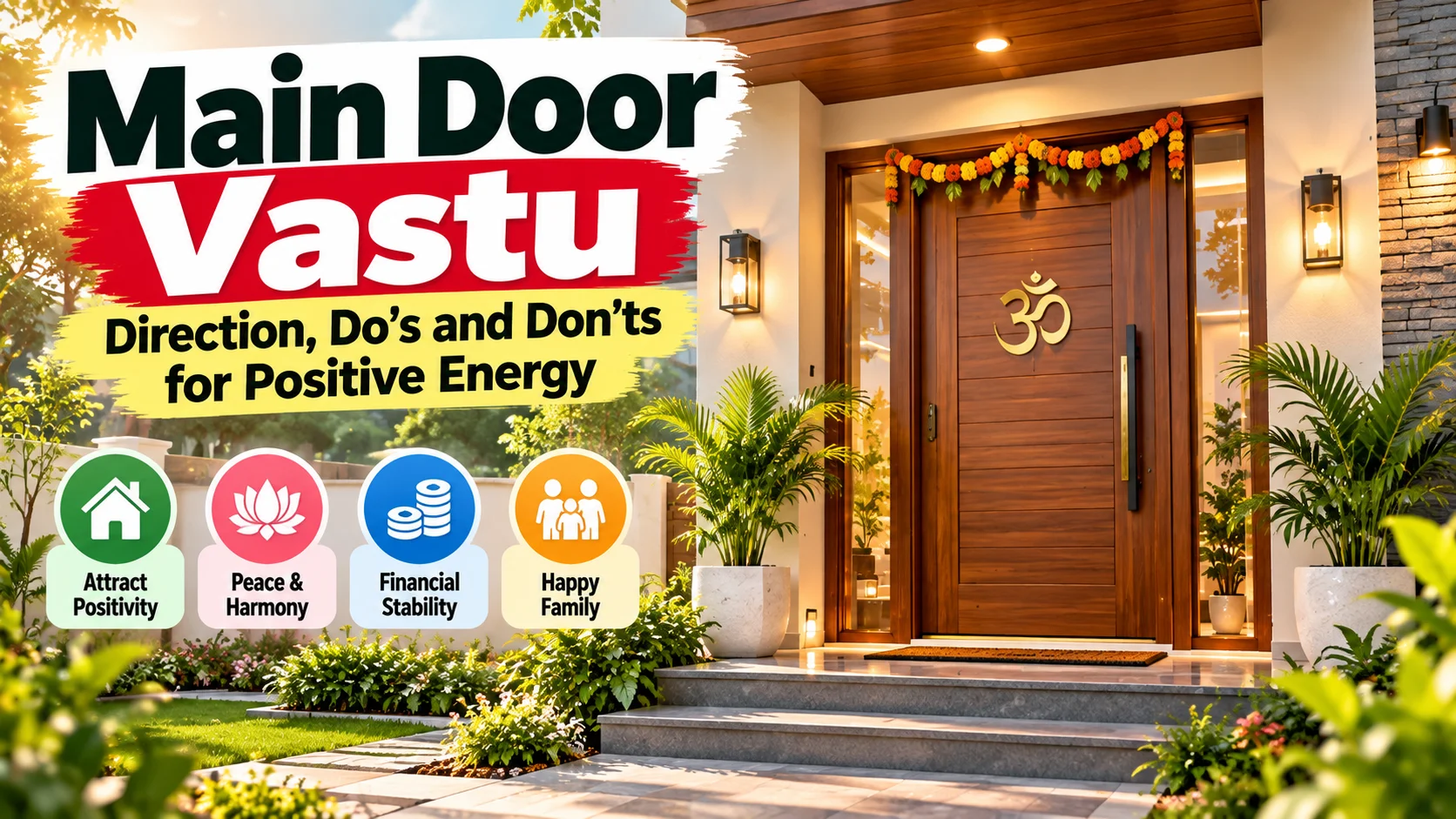
The main door is an important part of a home because it is the primary point of entry and creates the first impression of the house. According to traditional Vastu principles, the direction, placement, condition, and surroundings of the entrance are considered when planning a home. Practical factors such as safety, ventilation, lighting, and easy movement should also be taken into account.
Why Main Door Vastu Matters
Traditional Vastu considers the main entrance an important part of the home layout. Direction, door placement, material, colour, lighting, and cleanliness are commonly considered together.
A well-maintained entrance can also make a home feel more welcoming and organized. Vastu recommendations should be understood as traditional planning practices rather than guaranteed methods for changing health, wealth, or other life outcomes.
Best Main Door Directions According to Traditional Vastu
North
North is traditionally associated with wealth and opportunities. A clean and unobstructed entrance in this direction is commonly preferred in Vastu-based planning.
East
East is traditionally associated with the rising sun, freshness, and new beginnings. It is commonly considered a favourable direction for a main entrance.
Northeast
Northeast, or Ishan, is given special importance in traditional Vastu. This zone is often kept light, clean, and open.
Northwest
Northwest is associated with movement and activity in traditional Vastu. Some Vastu practices also consider it suitable for particular homes and layouts.

Directions Commonly Avoided in Traditional Vastu
Southwest
Southwest is generally treated carefully in traditional Vastu and is more commonly associated with stability and heavier zones than with the main entrance.
South
South-facing entrances are not universally treated the same way in Vastu. Their suitability can depend on the exact placement and overall house layout.
West
West can be used in some house plans, but its suitability depends on the overall arrangement rather than the direction alone.
Main Door Vastu Do’s
- Keep the entrance clean, dry, and well-lit.
- Use a strong and well-maintained main door.
- Keep the door free from cracks, damage, and peeling finishes.
- Use a clear and neat nameplate.
- Keep the entry path free from unnecessary clutter.
- Make sure the door opens and closes smoothly.
- Plants or simple decorative elements can be used if they do not obstruct movement.
- Maintain good lighting around the entrance, especially after dark.
Main Door Vastu Don’ts
- Do not block the entrance with unnecessary storage.
- Avoid broken objects, garbage, or excessive clutter near the door.
- Avoid placing a staircase or large obstruction immediately in front of the entrance.
- Do not allow the door to remain damaged or difficult to operate.
- Avoid placing a mirror directly opposite the main entrance if following traditional Vastu practices.
- Do not let the entrance become dark, damp, or poorly maintained.
Main Door Position for an East-Facing House
For an east-facing house, traditional Vastu commonly gives importance to the eastern side of the frontage. The exact door position should be considered along with the width of the house, internal rooms, and other openings.
Light, durable finishes can make an entrance feel brighter and easier to maintain. Traditional Vastu colour suggestions vary by direction, so treat them as preferences rather than fixed rules. Choose an exterior finish that suits the climate, facade, and maintenance requirements of the house.
Main Door Position for a North-Facing House
For a north-facing house, the entrance is commonly planned on the northern side. Keep the approach clean and unobstructed, and consider the internal layout before selecting the exact door position.
Some traditional Vastu sources suggest cool shades for a north-facing entrance. In practice, select a weather-resistant colour that works with the building exterior and does not reduce visibility around the entry.
Main Door Position for a South-Facing House
South-facing homes require more careful planning in traditional Vastu. Instead of assuming that every south-facing entrance is unsuitable, the exact door position and complete layout should be considered together.
Some Vastu practitioners suggest non-structural remedies when changing an entrance is not practical. Such remedies are traditional practices, not scientifically established methods for changing health, finances, or personal outcomes. Avoid expensive or unsafe alterations based only on fear about a direction.
Main Door Position for a West-Facing House
West-facing homes can also be planned according to the overall layout. Traditional Vastu recommendations commonly consider the western frontage and the exact entrance position separately.
For the door, simple and well-maintained finishes are generally more useful practically than excessive decoration.
Main Door Vastu Checklist
| Vastu Element | Common Recommendation |
|---|---|
| Entrance | North, East or Northeast are commonly preferred |
| Door Condition | Strong, clean and well-maintained |
| Entrance Lighting | Bright and comfortable |
| Surroundings | Clean and uncluttered |
| Nameplate | Clear and readable |
| Door Movement | Smooth opening and closing |
| Decorative Plants | Only where they do not obstruct entry |
Traditional Vastu Remedies for Existing Entrances
Changing the main entrance may not always be possible, especially in an existing or rented home. Traditional Vastu practices may suggest remedies such as symbols, pyramids, mirrors, or colour changes.
These remedies should be understood as traditional Vastu practices, not scientifically established methods for changing financial, health, or personal outcomes. The original article also suggested symbols, salt-based remedies, and other adjustments. Such items are optional cultural preferences; do not spend heavily or make unsafe changes based on promises of guaranteed results.
FAQs About Main Door Vastu
Which direction is best for a main door according to Vastu?
North, East, and Northeast are commonly considered favourable directions in traditional Vastu. The exact position of the door should also be considered within the complete house layout.
Can I have a main door in the South direction?
A South-facing entrance is not automatically the same for every house. Traditional Vastu recommendations can vary depending on the exact placement and overall layout.
What should I keep near the main door?
Keep the entrance clean, well-lit, and easy to access. A neat nameplate and suitable plants can be used as long as they do not block movement.
Can I use a mirror near the main entrance?
People following traditional Vastu often avoid placing a mirror directly opposite the main door. Placement should also be considered from a practical interior-design perspective.
Main Door Material, Threshold and Maintenance
Traditional Vastu guides often prefer a strong wooden main door and may recommend a visible threshold. These are traditional design preferences, not measures that guarantee wealth or protection. Choose a door based on security, durability, weather exposure, maintenance and the quality of its frame and hardware.
- Door leaf and frame: Use a sturdy, properly installed door and frame suited to the building. The lock, hinges and fixing points should be strong and maintained.
- Opening clearance: Make sure the door opens smoothly without hitting furniture, steps or people using the entrance. Do not reduce the clear width needed for safe movement.
- Threshold: A small threshold may be used as a traditional detail, but it should not create a trip hazard or obstruct wheelchair, stroller or elderly access.
- Nameplate and lighting: Keep the house number or name readable and provide enough light for visitors to identify the entrance safely.
- Door condition: Repair loose handles, damaged locks, swollen frames, sharp edges and squeaking hinges before they become safety or security problems.
Main Door Vastu: Common Claims and Practical Facts
| Traditional claim or suggestion | Practical way to understand it |
|---|---|
| North, East or Northeast entrances are favourable | These are traditional preferences. A direction alone does not prove financial or personal outcomes. |
| A South-facing entrance always causes problems | South-facing homes are not automatically unsuitable. The building layout, access, light, ventilation and safe entry matter. |
| A copper strip or pyramid can solve every entrance issue | Such items are optional traditional practices and have not been established as ways to prevent financial loss. |
| A wooden door is always better than every other material | Material selection should account for strength, weather, fire requirements, security and maintenance. |
Before spending money on entrance remedies, identify the actual problem. A dark entry may need better lighting; a difficult door may need hinge adjustment; and a damp threshold may need drainage or waterproofing work. These practical improvements are more reliable than promises made about symbolic objects.
What can I do if my main door is already in an unfavourable position?
First improve practical factors such as cleanliness, lighting, maintenance, and clear movement. Traditional Vastu remedies may also be considered where appropriate.