
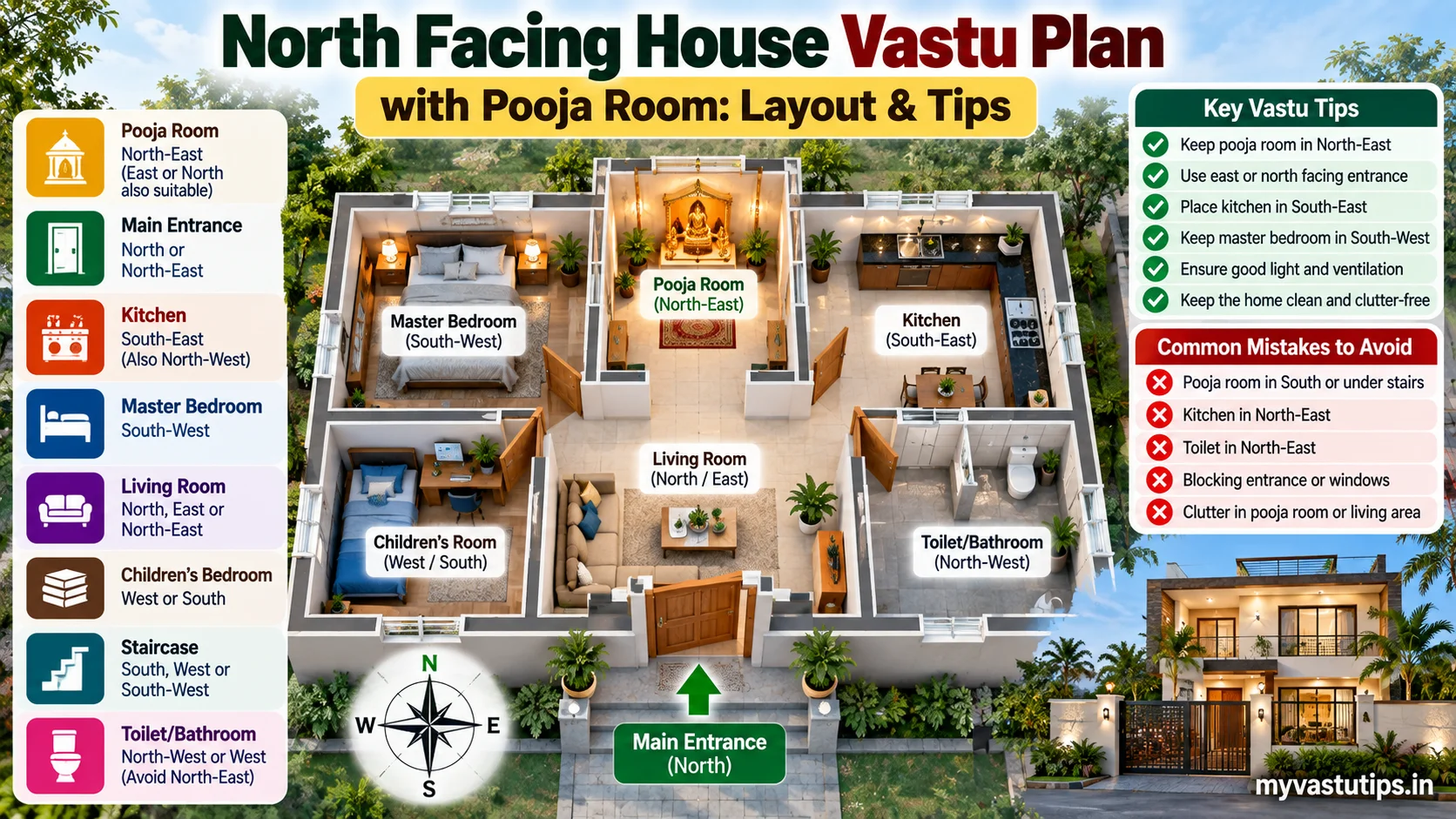
A north-facing house is traditionally considered a favourable option in Vastu Shastra, but the overall floor plan matters more than the facing direction alone. Entrance position, room placement, natural light, ventilation and the location of the pooja room should all be considered together.
For a north-facing home with a pooja room, traditional Vastu commonly gives importance to the northeast, east and north zones. At the same time, practical factors such as privacy, plumbing, electrical work, safety and everyday comfort should be part of the planning process.
Why North Facing Houses Are Important in Vastu
Traditional Vastu associates the north direction with opportunities, movement and financial activity. This is why north-facing homes are often preferred by people following Vastu principles.
However, a north-facing property is not automatically better or worse than another orientation. The complete layout, entrance position, room arrangement and quality of the space should also be evaluated.
Best Location for Pooja Room in a North Facing House
The northeast, or Ishan zone, is traditionally considered the preferred location for a pooja room. East and north may also be considered when the northeast is not practical.
- Northeast: Traditionally preferred for prayer and meditation.
- East: Commonly considered a suitable alternative.
- North: Can also be used depending on the floor plan.
The pooja space should be clean, peaceful and free from unnecessary storage. Its exact placement should also work comfortably with the rest of the home.
Pooja Room Design Tips
When building or renovating a pooja room, simple and practical planning is usually easier to maintain.
- Keep the prayer area clean and organised.
- Provide suitable lighting and ventilation.
- Use a comfortable height for the prayer platform.
- Avoid placing the pooja room directly beside a bathroom where practical.
- Choose light and pleasant colours such as white, cream or soft yellow.
- Keep religious books and other items neatly arranged.
North Facing House Entrance Vastu
Traditional Vastu commonly gives preference to the north, east or northeast for a main entrance. For a north-facing house, the exact position of the door on the north side should be considered as part of the complete floor plan rather than relying only on the word “north-facing”.
- Keep the entrance clean and well lit.
- Use a clear and easily visible nameplate.
- Avoid blocking the doorway with storage or unnecessary objects.
- Make sure the door opens and closes smoothly.
Kitchen Placement in a North Facing House
The southeast is traditionally preferred for a kitchen because it is associated with the fire element. Northwest is also mentioned as an alternative in traditional Vastu.
- Place the stove safely and maintain enough working space.
- Traditional Vastu commonly recommends facing east while cooking.
- Keep the kitchen well ventilated.
- Maintain a practical separation between the stove and sink.
- Prioritise plumbing, exhaust and fire safety during renovation.
Bedroom Placement
The southwest is traditionally preferred for the master bedroom because it is associated with stability. The final choice should also consider privacy, ventilation, temperature and room size.
- Place the bed against a stable wall.
- Traditional Vastu commonly recommends sleeping with the head towards the south or east.
- Keep unnecessary storage away from under the bed.
- Use calm, comfortable colours for the bedroom.
Living Room Placement
The north, east or northeast may be considered for a living room in traditional Vastu. The room should also allow comfortable movement, natural light and ventilation.
- Keep the main seating area organised.
- Avoid blocking windows and ventilation points.
- Place heavier furniture towards the south or west where practical.
- Use comfortable colours that suit the room’s natural light.
Vastu Adjustments for an Existing North Facing House
Not every existing home will perfectly match traditional Vastu preferences. Major structural changes are not always practical or necessary.
- Reduce clutter in the northeast and central areas.
- Improve natural light and ventilation.
- Rearrange heavy furniture where practical.
- Keep the entrance clean and unobstructed.
- Organise the pooja space separately from general storage.
Traditional symbols or Vastu products may be used according to personal belief, but they should not be presented as scientifically proven methods for changing health, wealth or family outcomes.
Do’s and Don’ts for a North Facing Home with Pooja Room
Do’s
- Keep the pooja room clean and well maintained.
- Provide suitable light and ventilation.
- Keep the entrance free from clutter.
- Use a practical and organised floor plan.
Don’ts
- Do not use the pooja area as general storage.
- Avoid keeping broken or damaged decorative items.
- Do not block important windows and ventilation openings.
- Avoid expensive structural changes based only on fear.
FAQs About North Facing House with Pooja Room
Is northeast the only place for a pooja room?
No. Northeast is traditionally preferred, while east and north may also be considered when the ideal location is not practical.
Can a pooja room be placed in the living room?
Yes. A dedicated corner can be used, especially when the northeast or east part of the living room is suitable and the prayer area can be kept clean and separate.
Which direction is preferred for the kitchen in a north-facing house?
Southeast is traditionally preferred, with northwest also commonly mentioned as an alternative.
Which direction is preferred for the master bedroom?
The southwest is traditionally preferred for the master bedroom because it is associated with stability.
Is a north-facing house automatically good as per Vastu?
No. Facing direction is only one factor. The entrance, internal layout, room placement, light, ventilation and practical usability should also be considered.
Can an existing north-facing house be improved without renovation?
Yes. You can focus on decluttering, furniture arrangement, lighting, ventilation, entrance maintenance and organisation of the pooja area without changing the structure.
A north-facing house with a pooja room can be planned effectively by combining traditional Vastu preferences with practical home design. The northeast, east and north are commonly considered for the pooja space, while the complete layout should be reviewed before making structural decisions.
1 thought on “North Facing House Vastu Plan with Pooja Room: Layout & Tips”