
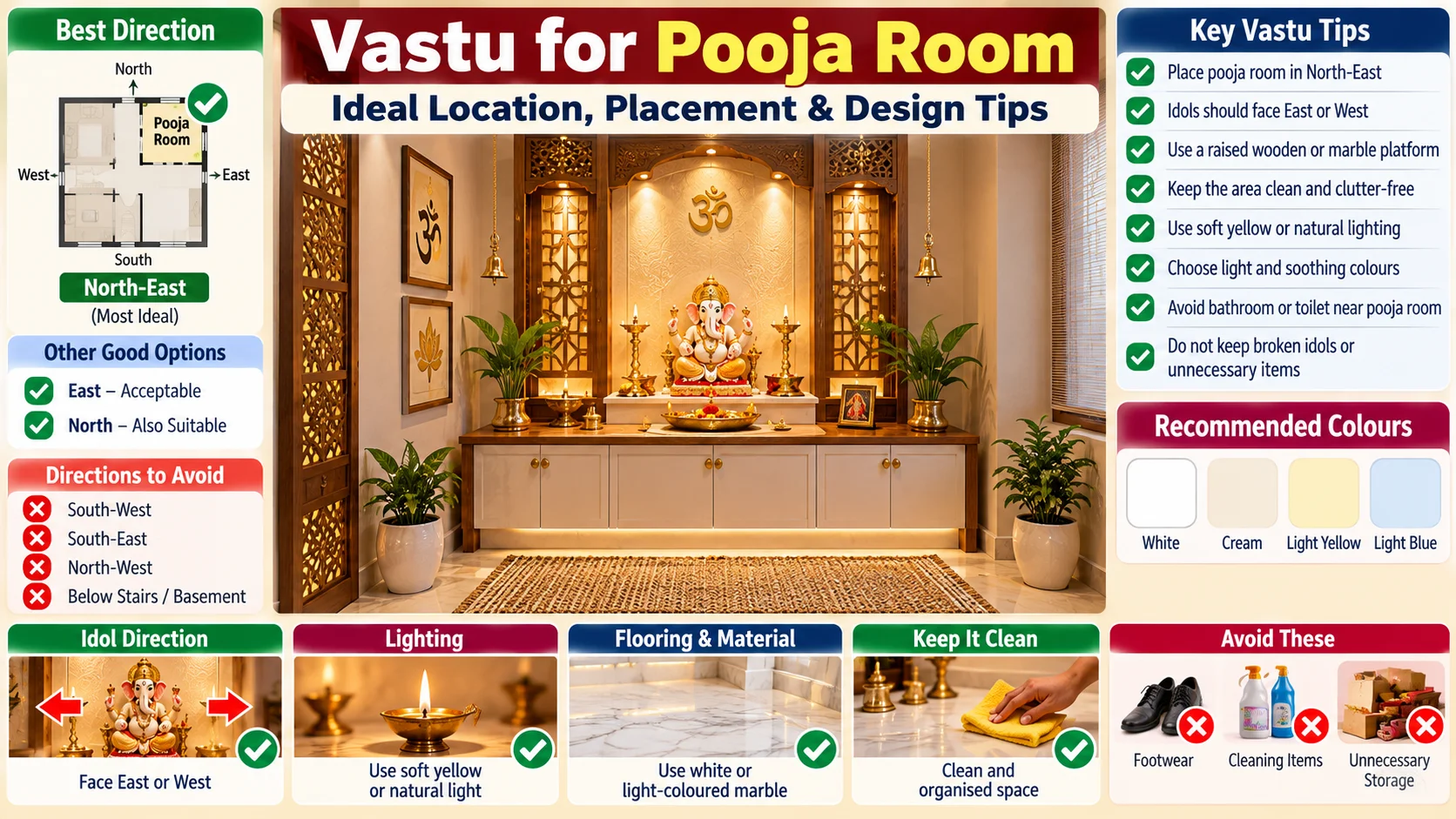
Vastu for pooja room is commonly considered when creating a peaceful and dedicated space for prayer and meditation at home. Traditional Vastu guidance gives attention to the location of the pooja room, idol placement, colours, lighting, materials, and cleanliness.
Whether you have a separate pooja room or a small prayer space in an apartment, the arrangement should remain simple, clean, comfortable, and suitable for regular use.
Why Pooja Room Placement Matters
The pooja room is considered a special space in traditional Vastu planning. Its location and arrangement are commonly associated with peace, concentration, and a calm atmosphere during prayer.
Rather than filling the area with too many items, a dedicated and organised prayer space can make daily पूजा or meditation more comfortable.
Ideal Location for Pooja Room as per Vastu
Northeast is traditionally considered the preferred direction for a pooja room. East and north may also be considered when northeast is not available.
- Northeast: Commonly considered the most suitable direction for a pooja room.
- East: Can be considered when northeast is unavailable.
- North: Another possible option depending on the home layout.
- Southwest: Generally avoided for a dedicated pooja room in traditional Vastu guidance.
- Southeast and Northwest: Usually not the first choices for a pooja space.
The room should also remain away from unnecessary clutter and should be easy to access for regular prayer.
Pooja Room Placement in Different Homes
Independent Houses
In an independent house, a separate pooja room can be planned in the northeast portion when the building layout allows it. A dedicated space can also make it easier to keep prayer items organised.
Apartments and Flats
In smaller homes, a separate room may not always be possible. A compact wooden mandir or dedicated shelf can be used in a suitable part of the living area, with cleanliness and privacy maintained.
The prayer space should ideally not be attached directly to a bathroom or toilet.
Idol Placement and Direction
Idol placement is an important part of traditional pooja room planning. The arrangement should allow enough space for prayer and regular cleaning.
- Place idols on a raised wooden or marble platform rather than directly on the floor.
- Traditional guidance commonly recommends arranging idols so they face east or west.
- Keep a small gap between the idols and the wall where practical.
- Avoid keeping broken or damaged idols in the prayer area.
- Keep the number of idols manageable so the space does not become crowded.
Pooja Room Design as per Vastu
A pooja room does not need to be large to feel peaceful. Simple materials, suitable lighting, and enough space for movement can create a practical prayer area.
Traditional Vastu guidance commonly discusses light-coloured flooring, wooden doors, soft lighting, and light shades for walls.
- Flooring: White or other light-coloured materials can be used.
- Door: Wooden doors with two shutters are traditionally preferred where suitable.
- Lighting: Soft yellow or natural light can create a calm setting.
- Colours: White, cream, pale yellow, and light blue are commonly suggested.
- Storage: Keep storage organised and place it away from the main prayer area where possible.
Pooja Room Decoration Ideas
Decor should complement the purpose of the space without making it crowded. Traditional prayer items such as diyas and bells can be included according to personal preference.
- Use simple spiritual symbols such as Om or Swastik where appropriate.
- Keep the area clean and organised.
- Use fresh flowers or other simple decorative elements.
- Maintain a dedicated place for prayer accessories.
- Remove damaged or unnecessary items regularly.
Lighting and Cleanliness
Good lighting helps make a pooja room comfortable for prayer and reading. Natural light can be used during the day, while soft lighting can be used in the evening.
Regular cleaning is equally important. Keep the floor, platform, lamps, shelves, and prayer items free from dust and unnecessary clutter.
What to Avoid in a Pooja Room
Traditional Vastu places importance on keeping the pooja area peaceful and separate from unrelated household activities.
- Avoid using the pooja room as a general storage area.
- Avoid placing footwear, cleaning supplies, or unrelated objects nearby.
- Do not overcrowd the space with too many idols or decorative items.
- Avoid placing the pooja room directly next to or against a bathroom where practical alternatives are available.
- Keep the prayer area clean, dry, and well maintained.
Vastu for Small Pooja Spaces
Small homes can still have a dedicated prayer area without building a separate room. A wall-mounted wooden mandir, compact cabinet, or dedicated shelf can work when space is limited.
Choose a position that keeps the prayer area undisturbed and provides enough room for lighting a diya, placing prayer items, and cleaning.
Pooja Room Vastu Quick Reference
Preferred Direction: Northeast is traditionally preferred.
Alternative Directions: East or North may be considered.
Idol Placement: Use a raised platform and keep the arrangement organised.
Colours: White, cream, pale yellow, and light blue are commonly suggested.
Lighting: Soft yellow or natural light.
Cleanliness: Keep the prayer area clean, dry, and clutter-free.
FAQs About Vastu for Pooja Room
Which direction is best for a pooja room?
Northeast is traditionally considered the preferred direction for a pooja room. East and north may also be considered when northeast is not available.
How should idols be placed in the pooja room?
Traditional guidance commonly recommends placing idols on a raised platform and arranging them so they face east or west.
Can I create a pooja space in an apartment?
Yes. A compact wooden mandir or dedicated shelf can be used when a separate pooja room is not practical.
Which colours are suitable for a pooja room?
White, cream, pale yellow, and light blue are commonly suggested for a calm and simple prayer space.
What should be avoided in a pooja room?
Avoid clutter, broken prayer items, footwear, unrelated storage, and placing the prayer area directly beside a bathroom where a practical alternative is available.
Vastu for pooja room mainly focuses on location, idol arrangement, design, lighting, colours, and cleanliness. Traditional Vastu preferences can be used to organise the prayer space while keeping the room simple, peaceful, easy to maintain, and suitable for everyday prayer.
2 thoughts on “Vastu for Pooja Room: Ideal Location, Placement & Design”