
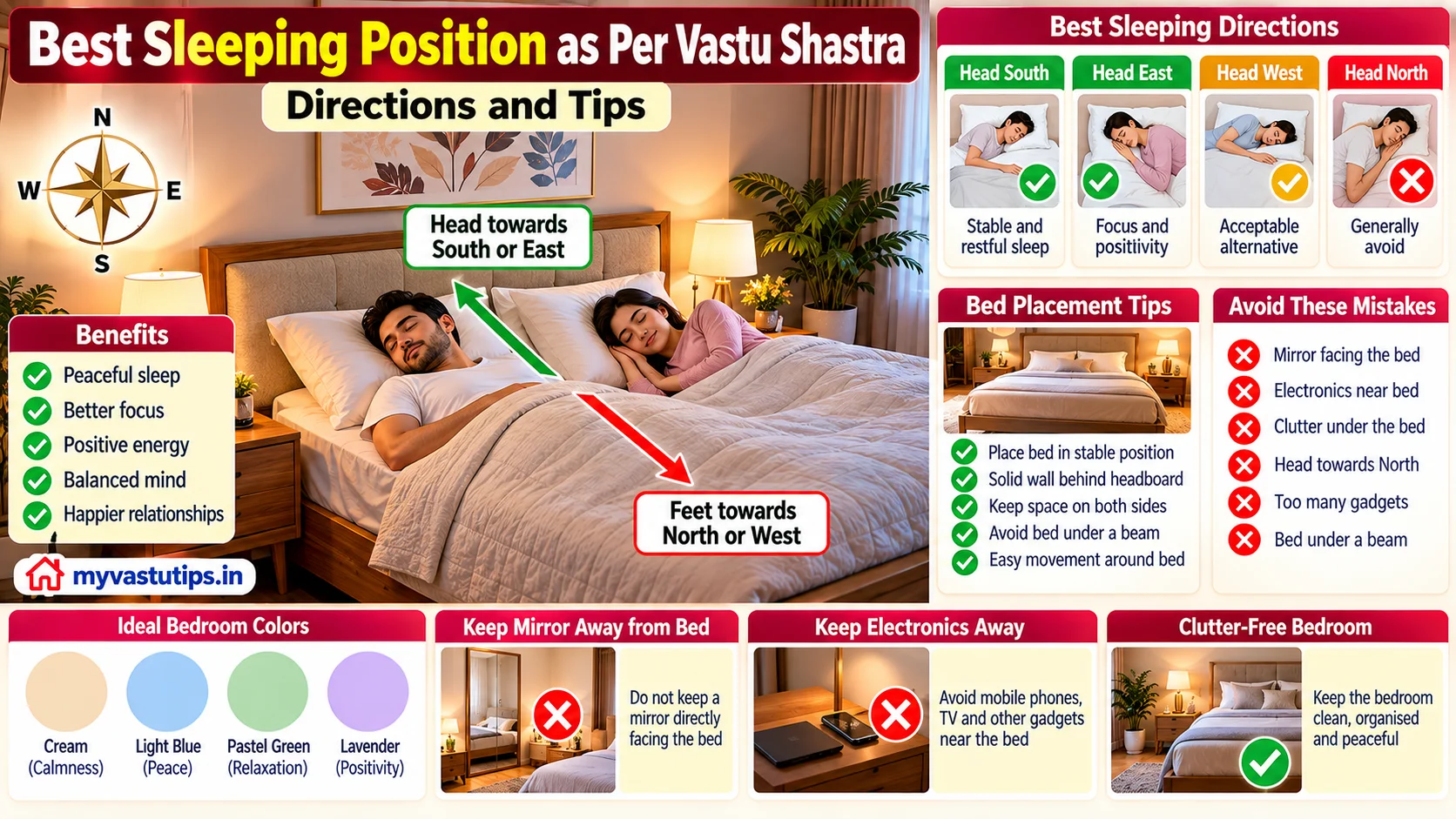
Best sleeping position as per Vastu Shastra is commonly discussed in relation to the direction of the head, bed placement, and the overall bedroom arrangement. Traditional Vastu gives importance to the direction in which a person sleeps and recommends certain positions for a calm and balanced sleeping environment.
Along with Vastu preferences, a bedroom should also provide comfortable bedding, proper ventilation, suitable lighting, and a quiet environment for rest.
Why Sleeping Direction Matters in Vastu
According to traditional Vastu practice, the direction of the head while sleeping is an important part of bedroom planning. South and east are commonly preferred directions, while north is generally avoided.
The sleeping direction should be considered together with the actual position of the bed, room layout, windows, doors, and available space.
Best Sleeping Direction as Per Vastu
Head Towards South
Sleeping with the head towards the south is traditionally considered one of the preferred arrangements. It is commonly associated with stability and restful sleep.
Head Towards East
East is also commonly recommended in Vastu, especially for students, learners, and people who prefer a direction traditionally associated with concentration and clarity.
Head Towards West
West can be considered when south- or east-facing sleeping positions are not practical. In traditional Vastu, it is generally treated as an acceptable alternative.
Head Towards North
North-facing head placement is generally avoided in traditional Vastu recommendations. When possible, the bed can be arranged so that the head is towards the south or east instead.
Sleeping Direction Quick Reference
Head South: Commonly preferred for stability and rest.
Head East: Commonly preferred for learning, focus, and a positive bedroom setup.
Head West: Can be considered as an alternative.
Head North: Generally avoided in traditional Vastu guidance.
Bed Placement as Per Vastu
Sleeping direction is only one part of bedroom planning. The position of the bed also matters in traditional Vastu.
- Place the bed in a comfortable and stable position within the room.
- A solid wall behind the headboard is traditionally preferred.
- Keep reasonable space on both sides of the bed for easy movement.
- Avoid placing the bed directly under a beam where practical.
- Do not place the bed where doors or furniture make movement difficult.
Avoid Mirrors Facing the Bed
Traditional Vastu guidance commonly recommends avoiding a mirror that directly reflects the bed. If the existing layout makes this difficult, the mirror can be repositioned or covered when it is not being used.
The practical aim should also be to avoid visual distractions that may make the sleeping area feel uncomfortable.
Keep Electronics Away from the Sleeping Area
Modern bedrooms often contain phones, televisions, laptops, and other devices. Traditional Vastu generally suggests keeping unnecessary electronics away from the immediate sleeping area.
- Keep mobile phones away from the pillow while sleeping.
- Avoid unnecessary devices on the bedside table.
- Keep cables organised and away from the main sleeping space.
- Where possible, separate work equipment from the area used for rest.
Vastu Tips for a Peaceful Bedroom
A comfortable sleeping environment is important regardless of the direction chosen. Traditional Vastu-inspired bedroom planning often includes simple steps that also support a clean and relaxing space.
- Use soft and soothing colours such as cream, light blue, pastel green, or lavender.
- Keep the bedroom clean and clutter-free.
- Avoid unnecessary storage under the bed.
- Use soft lighting in the evening.
- Maintain proper ventilation and fresh air.
- Keep broken or unused items out of the bedroom.
Best Sleeping Position for Married Couples
For married couples, the southwest is traditionally preferred for the master bedroom. The head of the bed is commonly kept towards the south or east.
A couple’s bedroom should also allow comfortable movement, balanced bedside space, suitable lighting, and privacy. Traditional Vastu recommendations should be adapted to the actual size and layout of the room.
Common Sleeping Vastu Mistakes
Some common mistakes involve the sleeping direction as well as the overall condition of the bedroom.
- Keeping the head towards north when another arrangement is practical.
- Placing a mirror where it directly reflects the bed.
- Keeping excessive clutter under or around the bed.
- Using too many electronic devices close to the sleeping area.
- Placing the bed under a beam where it can be avoided.
- Ignoring ventilation, lighting, or comfortable movement.
FAQs About Best Sleeping Position as Per Vastu
Which direction is best for sleeping as per Vastu?
South is traditionally considered the preferred direction for the head while sleeping, while east is also commonly recommended.
Can we sleep with the head towards east?
Yes. East is commonly recommended in traditional Vastu, particularly in discussions related to concentration, learning, and a positive sleeping environment.
Should the head be towards north while sleeping?
North-facing head placement is generally avoided in traditional Vastu guidance. South or east can be considered where practical.
Where should the bed be placed?
The bed should be positioned in a stable and comfortable part of the bedroom, with a solid wall behind the headboard preferred in traditional Vastu planning.
Can married couples sleep in the southwest?
Yes. The southwest is traditionally preferred for the master bedroom of married couples, with the head commonly positioned towards the south or east.
The best sleeping position as per Vastu Shastra mainly focuses on the direction of the head, bed placement, and the overall bedroom environment. South and east are commonly preferred, while north is generally avoided, but comfort, ventilation, lighting, and practical room layout should remain important parts of the final arrangement.