
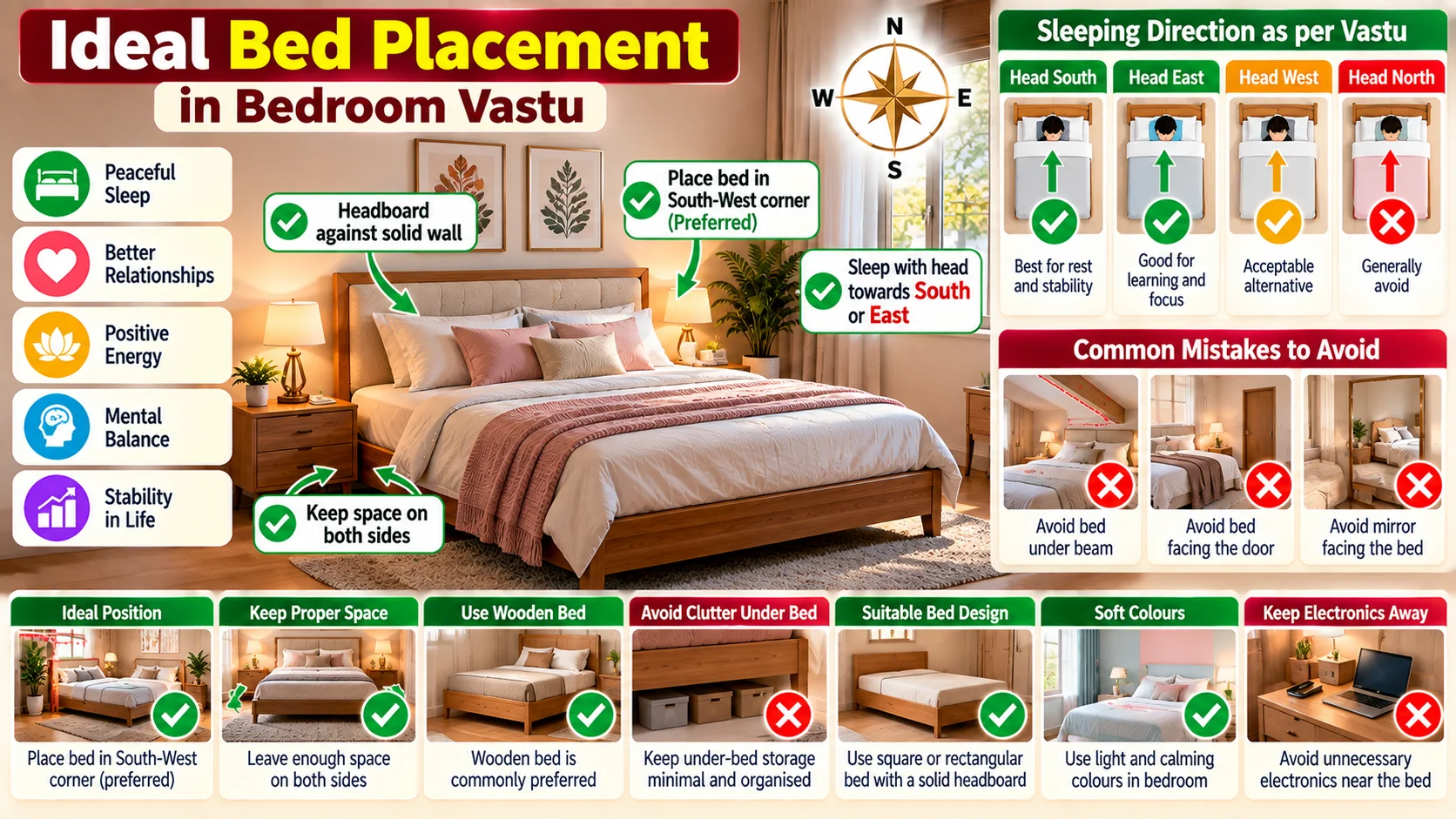
Ideal bed placement in bedroom Vastu is commonly considered when arranging a bedroom for rest and comfort. Traditional Vastu focuses on the position of the bed, the direction of the head while sleeping, the headboard, surrounding furniture, and the overall layout of the room. For a broader room-planning overview, see our Vastu for Bedroom guide.
A good bedroom arrangement should also provide enough walking space, comfortable furniture, proper ventilation, suitable lighting, and easy access to doors and windows. Vastu recommendations can be considered alongside these practical requirements.
Why Bed Placement Matters in Vastu
The bed is the main piece of furniture in most bedrooms, so its position has an important role in traditional bedroom planning. Vastu commonly considers a stable bed position, a suitable head direction, and an uncluttered area around the bed.
The final arrangement should suit the size and shape of the bedroom rather than forcing furniture into a position that makes the room difficult to use.
Best Sleeping Direction as per Vastu
Traditional Vastu generally gives preference to sleeping with the head towards the south or east. West may also be considered where the room layout requires an alternative arrangement.
- Head towards South: Commonly preferred for a stable and restful sleeping arrangement.
- Head towards East: Often suggested for students and people who prefer a direction traditionally associated with learning and focus.
- Head towards West: Can be considered when south or east is not practical.
- Head towards North: Generally avoided in traditional Vastu guidance.
Ideal Bed Placement in the Bedroom
Traditional Vastu commonly suggests placing the bed in a stable part of the bedroom, with the southwest area often preferred for a main or master bedroom.
- Keep the headboard against a solid wall where practical.
- Leave enough space on both sides of the bed for comfortable movement.
- Avoid placing the bed directly under a visible beam where possible.
- Do not position the bed where it blocks the door or normal movement.
- Keep the area around the bed clean and organised.
Bed Placement for Married Couples
For married couples, the southwest is commonly preferred for the master bedroom in traditional Vastu practice. For more room-specific ideas, see our bedroom Vastu guide for married couples. The headboard can be placed so that the head is towards the south or east while sleeping.
A comfortable bed, balanced space on both sides, and a simple bedroom layout are also useful for everyday living.
Bed Placement for Children
Children’s bedrooms may require a more flexible arrangement because the room often includes a study table, storage, and play space. East is commonly discussed as a suitable sleeping direction, while the head may be positioned towards the east or south.
The bed should also leave enough room for safe movement and should not interfere with windows, doors, or study furniture.
Bed Design and Material as per Vastu
Simple rectangular or square beds are commonly preferred in traditional Vastu-inspired bedroom planning. Wooden beds are also frequently recommended.
The practical choice should depend on strength, comfort, maintenance, room size, and personal preference. The bed should have a stable frame and a comfortable headboard rather than unnecessary decorative elements.
Mattress and Storage Under the Bed
A clean and comfortable sleeping surface is important for everyday use. Traditional Vastu guidance for couples commonly prefers a single mattress on a double bed.
Storage under the bed should be limited to useful items such as bedding or seasonal fabrics. Avoid turning the space into a storage area for broken, unused, or unnecessary belongings.
Bed Placement in Small Bedrooms
Small bedrooms may not allow an exact Vastu arrangement. In such cases, practical movement and access should come first while making the best possible adjustment.
- Keep the headboard against a stable wall where possible.
- Avoid blocking the main doorway.
- Leave enough space to get in and out of bed safely.
- Use compact furniture instead of overcrowding the room.
- Keep mirrors positioned so they do not directly reflect the bed.
Common Mistakes in Bed Placement
Some common bedroom layout problems can make the room less comfortable and are also commonly discussed in Vastu guidance.
- Placing the bed in the middle of the room without proper support.
- Sleeping with the head towards north when another arrangement is practical.
- Keeping a mirror where it directly reflects the bed.
- Storing excessive clutter under the bed.
- Placing furniture with sharp corners too close to the sleeping area.
- Allowing the bed to obstruct doors, windows, or normal movement.
Additional Vastu Tips for a Peaceful Bedroom
The bed works best when the rest of the bedroom is also organised. Traditional Vastu-inspired suggestions often include light colours, minimal clutter, limited electronics, and simple décor.
- Use soft colours such as cream, light blue, pastel green, or lavender.
- Keep unnecessary electronic devices away from the sleeping area.
- Use soft lighting during the evening.
- Keep heavy wardrobes toward the south or west where practical.
- Maintain good ventilation and natural light.
Ideal Bed Placement Quick Reference
Preferred Bedroom Area: Southwest is commonly suggested for the master bedroom.
Head Direction: South or East is commonly preferred.
Headboard: A solid wall behind the headboard is traditionally preferred.
Under-Bed Storage: Keep it limited and organised.
Mirror: Avoid direct reflection of the bed.
Furniture: Keep movement paths clear and the room uncluttered.
Bed Placement Checklist Before Rearranging a Bedroom
Before moving a heavy bed, measure the room and check the door swing, wardrobe access, windows, switches and power points. Then review the following:
- Access on both sides: Leave enough room to get in and out of bed safely, especially where two people use the bed.
- Headboard support: Secure the headboard properly and check that it does not cover sockets, switches or ventilation openings.
- Windows and daylight: Avoid blocking windows or placing the bed where direct light or outside noise makes rest uncomfortable.
- Door and wardrobe clearance: Make sure doors, drawers and cupboard shutters can open fully without hitting the bed.
- Electrical safety: Keep cables tidy and avoid trailing leads beside the bed or under rugs.
- Stable furniture: Secure tall wardrobes, shelves and other heavy bedroom furniture so that they cannot tip over.
- Under-bed storage: Store only clean, dry and useful items. Avoid blocking access to the floor for cleaning.
Traditional Vastu may influence the preferred direction of the bed or headboard, but these practical checks should be completed before moving heavy furniture. Do not compromise access, ventilation, electrical safety or comfort to follow a directional preference.
FAQs About Ideal Bed Placement in Bedroom Vastu
Where should the bed be placed as per Vastu?
The southwest area is commonly preferred for the bed in a master bedroom, provided the overall room layout remains comfortable and practical.
Which direction should the head face while sleeping?
South or east is commonly recommended in traditional Vastu guidance, while north is generally avoided.
Can the bed be placed under a beam?
It is generally better to avoid placing the bed directly under a visible beam where another practical position is available.
Can we keep storage under the bed?
Yes, limited storage such as bedding can be kept underneath, but excessive clutter and unnecessary items are better avoided.
Should the mirror face the bed?
Traditional Vastu commonly recommends avoiding a mirror that directly reflects the bed.
Ideal bed placement in bedroom Vastu mainly focuses on a stable bed position, suitable sleeping direction, proper headboard support, and an organised bedroom layout. South or east is commonly preferred for the head while sleeping, while the southwest is often considered suitable for a master bedroom, with practical comfort and available space kept in mind.
1 thought on “Ideal Bed Placement in Bedroom Vastu: Position, Direction & Tips”