
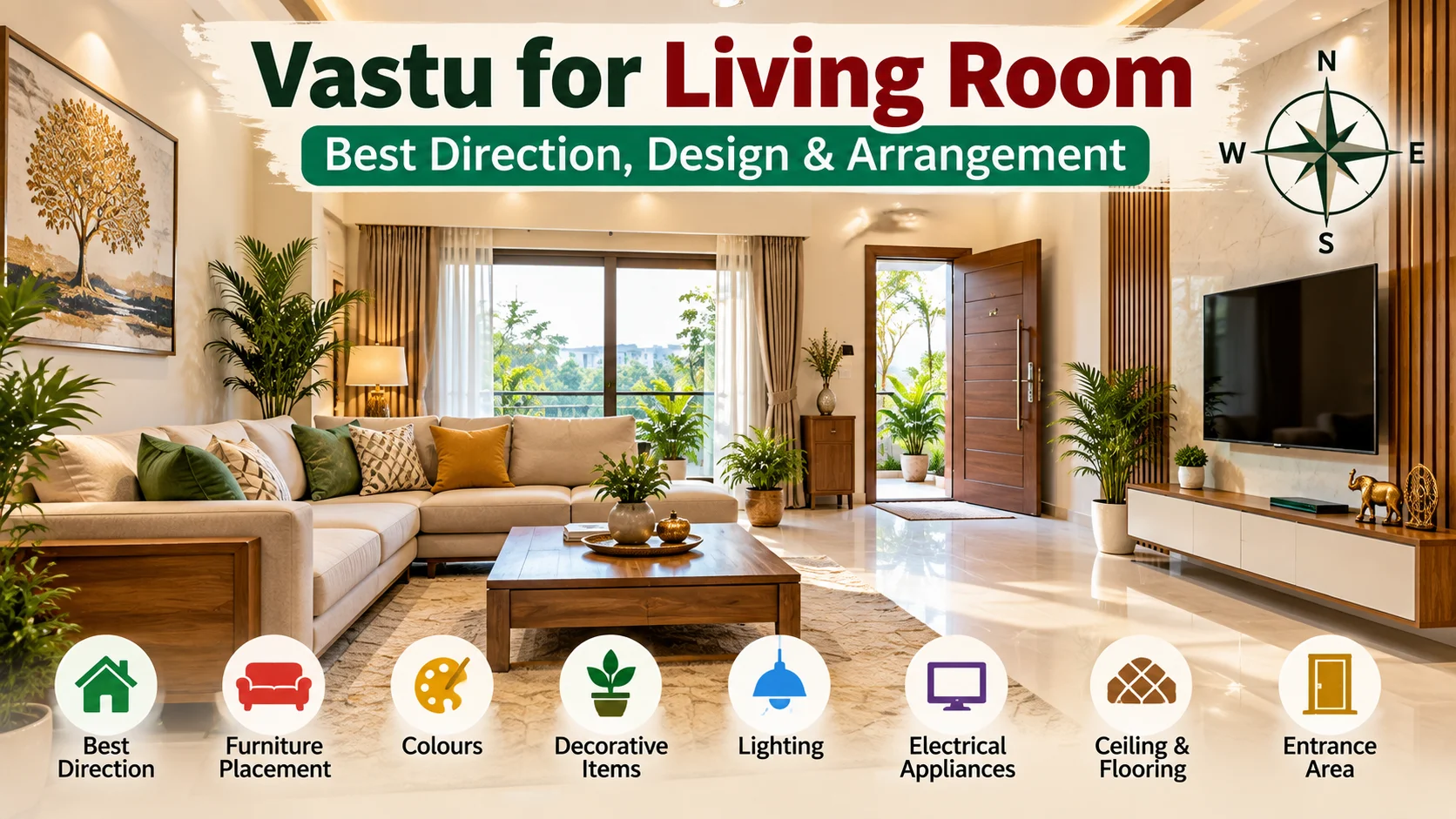
Vastu for living room is commonly considered when planning the direction, furniture placement, colours, lighting, and overall arrangement of a living or drawing room. Traditional Vastu focuses on creating a balanced and comfortable space for family members and guests.
A practical living room should also have enough movement space, natural light, good ventilation, comfortable seating, and easy access to doors and windows. Vastu preferences can be considered along with these everyday requirements.
Why Living Room Direction Matters
The living room is one of the most active areas of a home. Traditional Vastu gives importance to its direction because the room is used for family time, conversations, relaxation, and receiving guests.
A well-planned room should feel open and comfortable rather than crowded. Direction, furniture arrangement, light, and ventilation should work together.
Best Direction for Living Room as per Vastu
North, east, and northeast are commonly preferred directions for a living room in traditional Vastu planning. The exact choice can depend on the orientation and layout of the house.
North or East Living Room
North and east are commonly discussed for bright and active living spaces. Where the building layout allows, good natural light and ventilation can further improve the comfort of the room.
Living Room in a South-Facing House
For a south-facing home, the living room can be planned according to the available layout and entry position. Traditional Vastu may consider south or southeast areas in such homes, while practical movement and ventilation should remain important.
West-Facing House
Northwest is commonly discussed for the living room of a west-facing home. The final position should still provide comfortable seating, adequate daylight, and clear movement through the room.
Vastu Tips for Living Room Layout
The layout should keep the room functional and visually balanced. Avoid overcrowding the centre with heavy furniture.
- Keep the central area reasonably open for comfortable movement.
- Arrange seating so people can communicate easily.
- Keep windows and ventilation points unobstructed.
- Use furniture that fits the size of the room.
- Keep the entrance area neat and easy to access.
Furniture Placement in Living Room
Traditional Vastu commonly suggests placing heavier furniture along the south or west side of the living room. Sofas and cabinets can be arranged there where the layout permits.
- Sofa: South or west side is commonly preferred.
- TV unit: Southeast is traditionally suggested for electronic equipment.
- Cabinets: South or west can be considered for heavier storage.
- Coffee table: Keep it compact and avoid blocking the walking area.
Best Colours for Living Room
Light and soothing shades are commonly preferred for living rooms in traditional Vastu-inspired interiors. Cream, white, light yellow, beige, soft blue, and pastel shades can also make the room feel brighter.
The colour choice should depend on room size, natural light, furniture, and the overall interior style. Very dark shades can make a small or poorly lit room feel visually heavy.
Decorative Items for Living Room
Décor should complement the room without creating unnecessary clutter. Nature scenes, flowers, family photographs, and simple artwork can be used according to personal preference.
- Choose artwork that creates a calm and pleasant atmosphere.
- Keep decorative items limited and organised.
- Healthy indoor plants can be used where suitable light is available.
- Remove broken or damaged decorative objects.
Electrical Appliances and Vastu
Modern living rooms often contain televisions, air conditioners, lamps, and other electrical equipment. Traditional Vastu commonly associates heat-generating or electrical items with the southeast area.
Regardless of direction, appliances should be installed safely, cables should remain organised, and equipment should not block ventilation or walking paths.
Ceiling and Flooring Tips
A simple and well-maintained ceiling can make the living room feel more spacious. Choose flooring that is durable, easy to clean, and suitable for the room’s use.
Light-coloured flooring can improve brightness, particularly in rooms with limited natural light. Safety and maintenance should remain the main practical considerations.
Entrance and Main Door Area
The living room entrance should remain clean, well-lit, and free from unnecessary objects. A clear passage makes movement easier and gives the room a more welcoming appearance.
Traditional Vastu may also consider a nameplate, simple decorative elements, or auspicious symbols near the entrance according to personal and cultural preferences.
Common Living Room Vastu Mistakes
Many problems in a living room are actually related to poor space planning. Common issues include excessive furniture, blocked windows, poor lighting, and unnecessary clutter.
- Blocking the main entrance with furniture.
- Keeping the centre of the room overcrowded.
- Allowing broken furniture or damaged décor to remain.
- Blocking windows or ventilation points.
- Using too many large decorative items in a small room.
Vastu for Living Room Quick Reference
Preferred Directions: North, East, or Northeast are commonly discussed.
Heavy Furniture: South or West is commonly preferred.
Electronics: Southeast is traditionally associated with electrical equipment.
Colours: Cream, white, beige, light yellow, and soft pastel shades.
Centre: Keep reasonably open and free from unnecessary clutter.
Entrance: Keep it clean, well-lit, and unobstructed.
FAQs About Vastu for Living Room
Which direction is best for a living room?
North, east, and northeast are commonly preferred in traditional Vastu planning, depending on the house layout.
Where should the sofa be placed as per Vastu?
Traditional guidance commonly places heavier seating along the south or west side, while keeping the room comfortable and easy to move through.
Which colours are suitable for a living room?
Light shades such as cream, white, beige, light yellow, soft blue, and pastels are commonly used for a calm and bright living room.
Can electronics be kept in the living room?
Yes. Traditional Vastu commonly associates electrical and heat-generating appliances with the southeast area. Safe installation and proper cable management should also be considered.
How can I keep my living room Vastu-friendly?
Keep the room clean and organised, maintain clear movement paths, use comfortable furniture, allow natural light and ventilation, and consider traditional directional preferences where practical.
Vastu for living room mainly focuses on direction, furniture placement, colours, décor, lighting, and overall arrangement. These traditional preferences can be combined with practical interior planning to create a living room that is comfortable, bright, organised, and suitable for everyday family use.
5 thoughts on “Vastu for Living Room: Best Direction, Design & Arrangement”