
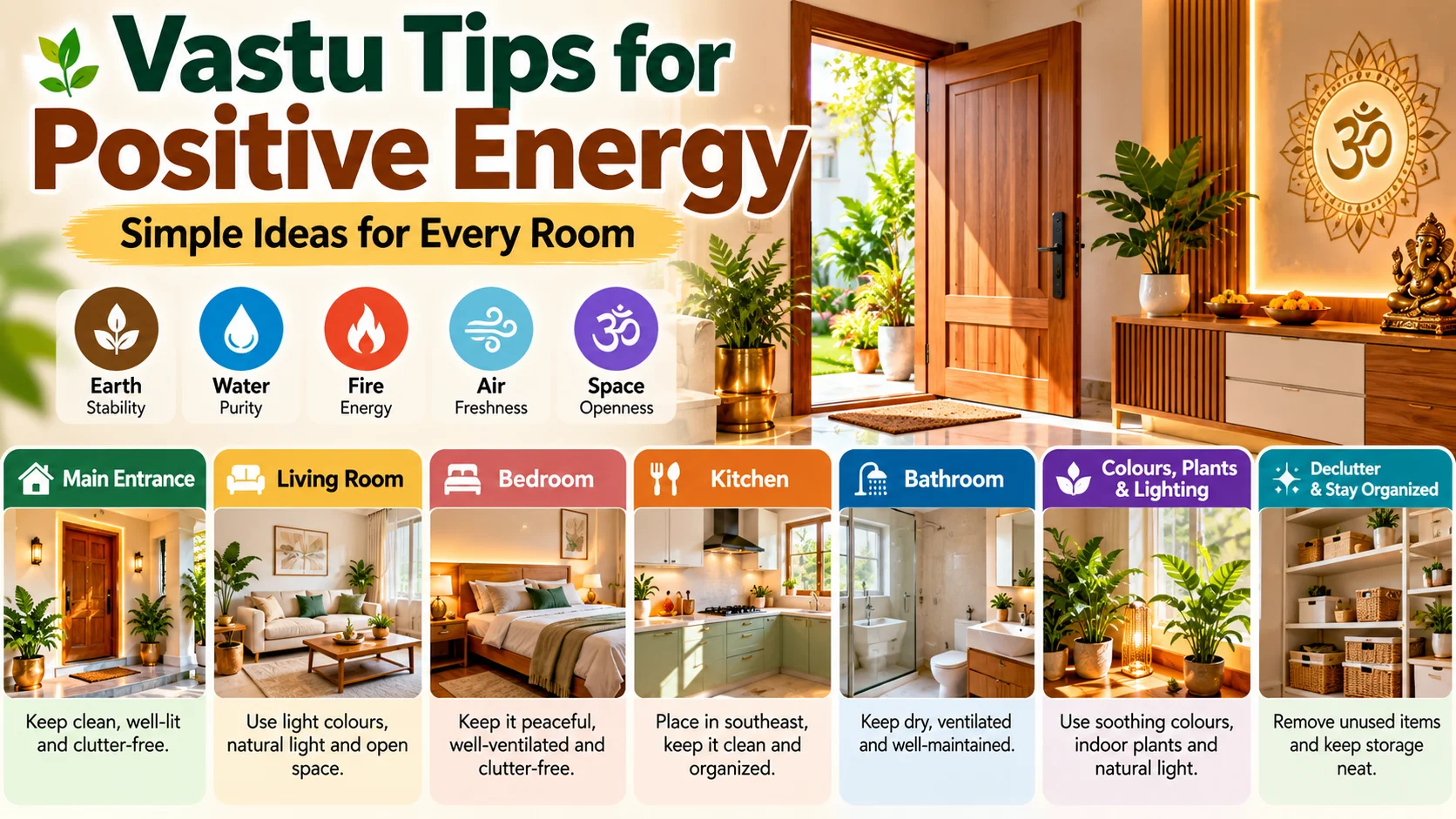
Vastu tips for positive energy are commonly used to create a peaceful, organized, and pleasant home environment. Vastu Shastra is a traditional Indian system that considers directions, space, and the arrangement of different areas in a building. Simple changes in entrance, room placement, lighting, colours, and cleanliness can also make a home feel more comfortable and welcoming. Pasted text
What Does Vastu Say About Positive Energy?
Traditional Vastu places importance on five elements—earth, water, fire, air, and space—and on the relationship between different directions. These ideas are used while planning rooms and arranging objects within a home.
The five elements are traditionally described as:
- Earth: stability and strength
- Water: flow and purity
- Fire: energy and transformation
- Air: movement and freshness
- Space: openness and clarity
Directions are also given different traditional associations, such as North with wealth, East with knowledge and growth, South with strength, and West with gains. Pasted text

Vastu Tips for Positive Energy at the Main Entrance
The entrance is an important part of a home because it is used throughout the day and creates the first impression of the house.
- Keep the entrance clean and free from unnecessary items.
- Use adequate lighting, especially in the evening.
- Keep the door and surrounding area well maintained.
- A neat nameplate can make the entrance look organized.
According to traditional Vastu, North, East, and Northeast are commonly preferred directions for the main entrance. Pasted text
Vastu Tips for Positive Energy in the Living Room
The living room should feel open, comfortable, and easy to use.
- Allow natural light and ventilation whenever possible.
- Avoid overcrowding the room with furniture.
- Heavy furniture can be kept toward one side to maintain clear movement.
- Light shades such as cream, beige, or light green are commonly used in Vastu-based interiors.
A clean and well-organized living room can create a more welcoming environment for family members and guests.
Vastu Tips for a Peaceful Bedroom
The bedroom is mainly a place for rest and privacy, so the layout should feel calm and comfortable.
- Keep unnecessary items away from the bed.
- Use soft lighting and calming colours.
- Avoid placing mirrors where they create unwanted reflections.
- Keep the room ventilated and regularly organized.
According to traditional Vastu, the master bedroom is commonly associated with the southwest part of the home, and sleeping with the head toward the South or East is often recommended. Pasted text
Vastu Tips for Positive Energy in the Kitchen
The kitchen is traditionally associated with the fire element.
- Keep the cooking area clean and organized.
- Maintain practical separation between cooking and water-related areas.
- Ensure proper ventilation.
- Store frequently used items where they are easy to access.
Traditional Vastu commonly places the kitchen in the Southeast zone, with East-facing cooking often recommended. Pasted text
Vastu Tips for Bathroom and Toilet
Cleanliness and ventilation are particularly important in bathrooms.
- Keep the area dry and well ventilated.
- Repair leaking taps or plumbing issues promptly.
- Keep the door closed when the bathroom is not in use.
- Avoid unnecessary storage and clutter.
Traditional Vastu commonly suggests Northwest or West for bathrooms and toilets and generally avoids placing them in the Northeast. Pasted text
Vastu Tips Using Colours, Plants and Natural Elements
Colours can change the visual mood of a room. White, cream, light green, blue, and yellow are commonly used in Vastu-based interiors for a calm and pleasant appearance. Pasted text
Plants can also add freshness to the home. Choose healthy plants that suit the available light and space, and keep them maintained rather than allowing dry or damaged leaves to accumulate.
Lighting and Ventilation for a Positive Home
Good lighting and airflow are useful practical features of any home.
- Use natural daylight where possible.
- Keep windows and ventilation areas unobstructed.
- Use warm, comfortable lighting in relaxing spaces.
- Avoid dark and poorly ventilated corners.
Traditional Vastu also gives importance to natural light and directional placement of windows and openings. Pasted text
Decluttering for a Balanced Home
A clutter-free home is easier to clean and use.
- Remove broken or unused items.
- Keep storage areas organized.
- Avoid blocking doors, windows, and walking paths.
- Review old items regularly instead of allowing unnecessary storage to build up.
Traditional Vastu also emphasizes openness and unobstructed movement in a space.
Common Vastu Mistakes to Avoid
- Keeping the entrance cluttered.
- Allowing broken furniture or unused items to accumulate.
- Ignoring ventilation and natural light.
- Overcrowding small rooms.
- Placing mirrors without considering their practical effect.
- Leaving dark, damp, or poorly maintained areas unattended.
Traditional Vastu Remedies for Existing Homes
Not every home can be redesigned. People who follow Vastu may use traditional remedies such as plants, mirrors, symbols, pyramids, or changes in furniture placement.
These should be understood as traditional Vastu practices, not guaranteed methods for changing health, financial results, or other life outcomes. The original article suggested mirrors, Vastu pyramids, and salt-based remedies for correcting certain issues. Pasted text
FAQs About Vastu Tips for Positive Energy
Which direction is considered best for positive energy in a home?
According to traditional Vastu, the Northeast, East, and North are often given special importance depending on the area of the home and its purpose.
How can I make my home feel more positive?
Start with practical improvements such as cleanliness, natural light, ventilation, organized storage, and comfortable room layouts. These can be combined with traditional Vastu preferences.
Which colours are commonly used for a peaceful home?
White, cream, light green, light blue, and soft yellow are commonly used in Vastu-based interiors.
Are plants useful according to Vastu?
Plants are commonly included in Vastu practices because they introduce a natural element into the space. Choose plants that suit the available light and maintain them properly.
Can Vastu be followed in an existing home?
Yes. Many Vastu-based changes involve furniture placement, cleanliness, lighting, colours, and organization rather than structural changes. Pasted text