
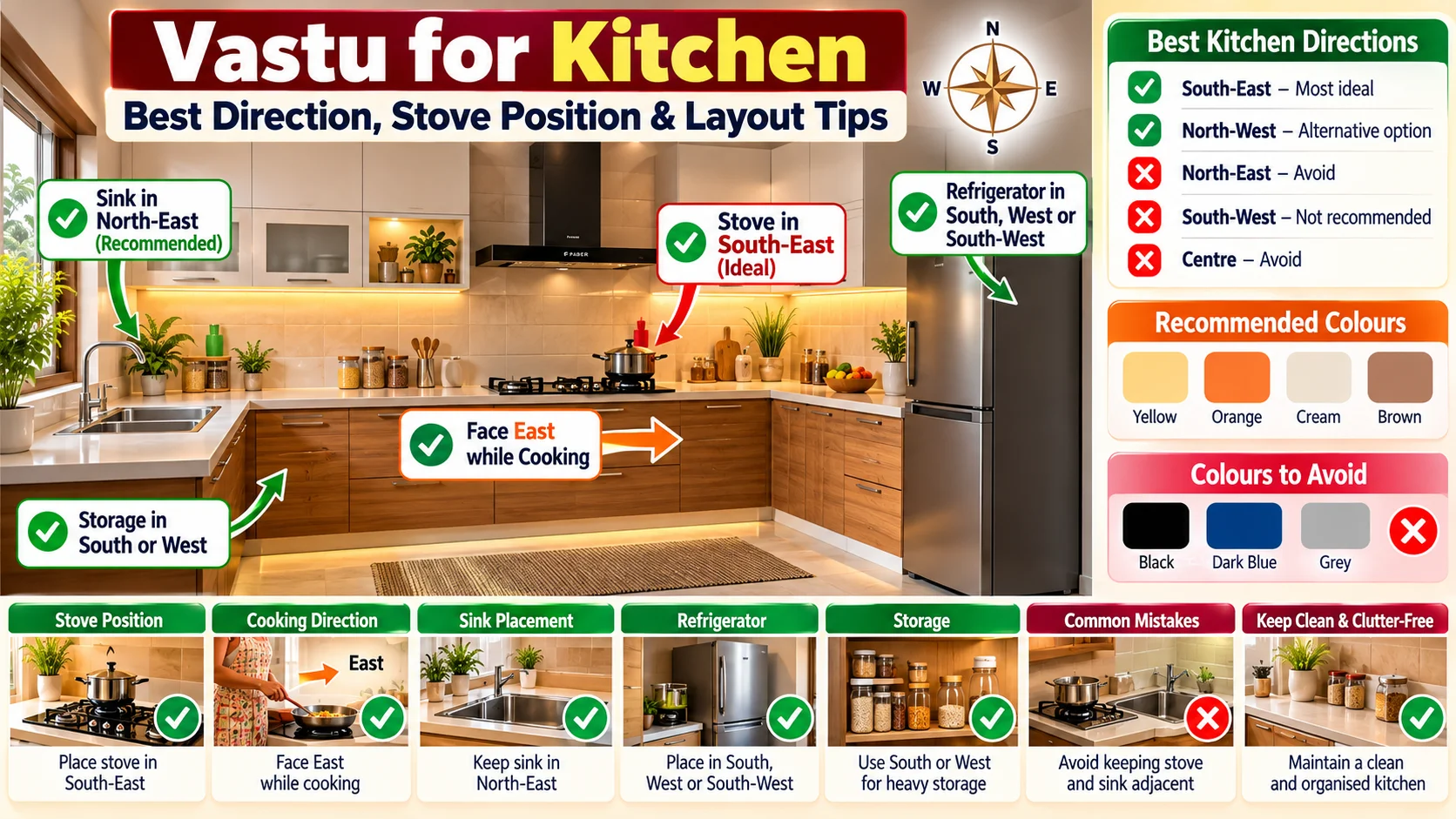
Vastu for Kitchen focuses on the direction, stove placement, water area, storage, colours, and overall arrangement of the cooking space. According to traditional Vastu Shastra, the kitchen is associated with the fire element, so its placement and layout are given particular importance. When updating an existing kitchen, coordinate these choices with the wider home renovation plan.
A practical kitchen should also have good ventilation, safe electrical connections, comfortable working space, and easy access to water and storage. The Vastu recommendations below can be considered alongside these everyday requirements.
Why Kitchen Direction Matters in Vastu
In traditional Vastu practice, the kitchen is connected with Agni, the fire element. The southeast is commonly preferred for the kitchen, while northwest is often considered an alternative when the preferred location is not practical.
The direction of the kitchen is only one part of planning. The position of the stove, sink, appliances, windows, and storage also affects how the space can be used.
Best Direction for Kitchen as per Vastu
Southeast is traditionally considered the preferred direction for a kitchen because it is associated with the fire element. Northwest is commonly discussed as an alternative option.
- Southeast: Commonly preferred for the kitchen in traditional Vastu.
- Northwest: Often considered an alternative when southeast is not practical.
- Northeast: Generally avoided for the kitchen in traditional Vastu planning.
- Southwest: Usually given other functions in a home layout rather than the kitchen.
- Centre of the home: Traditionally kept open and avoided for a kitchen.
Best Stove Placement in Kitchen
The stove is one of the main elements considered in kitchen Vastu because it represents fire. Traditional guidance commonly places the stove toward the southeast part of the kitchen.
The cooking position should also be comfortable and safe. Keep the stove away from water sources where practical and make sure there is enough working space around it.
- Stove position: Southeast is commonly preferred.
- Cooking direction: Facing east while cooking is traditionally recommended.
- Safety: Keep the stove away from unnecessary water exposure.
- Door clearance: Avoid placing the stove where it interferes with the kitchen entrance.
Sink and Water Placement
Water and fire are treated as different elements in traditional Vastu, so the sink and stove are commonly kept apart rather than placed directly next to each other.
Northeast is often suggested for the sink or water-related area of the kitchen. In a modern kitchen, the actual plumbing arrangement may limit the available options, so safe and convenient installation should remain a priority.
Kitchen Layout and Storage
A well-planned kitchen should provide a clear working triangle between the stove, sink, and refrigerator. Traditional Vastu commonly discusses placing heavier storage toward the south or west side of the kitchen.
- Keep frequently used items within easy reach.
- Use the south or west side for heavier storage where practical.
- Keep the centre of the kitchen open enough for comfortable movement.
- Store grains and groceries in an organised, dry area.
- Do not block windows, ventilation openings, or electrical points.
Kitchen Colours as per Vastu
Traditional Vastu often recommends warm or light shades for kitchens. Colours such as soft yellow, orange, cream, beige, and light brown can work well with modern kitchen interiors.
Very dark colours may make a kitchen feel smaller or visually heavy, particularly when natural light is limited. The final colour choice should also match the size and lighting of the room.
Electrical Appliances in the Kitchen
Electrical appliances such as microwaves, ovens, mixers, and toasters are commonly associated with the fire element in traditional Vastu guidance. Southeast is therefore often suggested for these appliances.
- Keep electrical appliances in a dry and ventilated location.
- Maintain a safe distance from sinks and water sources.
- Keep wires organised and away from wet areas.
- Place larger appliances where they do not restrict movement.
General Vastu Tips for Kitchen
Simple housekeeping habits can make the kitchen cleaner and more comfortable while also fitting traditional Vastu preferences.
- Keep the kitchen clean and free from unnecessary clutter.
- Dispose of kitchen waste regularly and keep the dustbin covered.
- Repair leaking taps and damaged fittings promptly.
- Use good ventilation to reduce heat, smoke, and cooking odours.
- Keep counters organised and clean after cooking.
- Use natural light where the building design permits.
Common Kitchen Vastu Mistakes
Some commonly discussed mistakes include placing the kitchen in a traditionally avoided area, keeping the stove and sink directly adjacent, blocking ventilation, and allowing clutter to accumulate.
- Placing the stove where it is directly exposed to water.
- Keeping heavy storage in a way that blocks movement or light.
- Ignoring ventilation while planning the kitchen.
- Keeping broken appliances or unused items for long periods.
- Allowing water leakage, dampness, or overflowing waste bins.
Vastu for Kitchen Quick Reference
Kitchen Direction: Southeast is traditionally preferred, with northwest often considered an alternative.
Stove: Southeast is commonly suggested.
Cooking Direction: East-facing is traditionally preferred.
Sink: Northeast is commonly discussed for the water area.
Heavy Storage: South or west is commonly suggested.
Appliances: Southeast is traditionally associated with electrical and fire-related appliances.
Important Practical Rule: Keep the stove, sink, electrical points, and storage arranged safely with adequate working space.
FAQs About Vastu for Kitchen
Which direction is best for a kitchen as per Vastu?
Southeast is traditionally considered the preferred direction for a kitchen, while northwest is commonly discussed as an alternative.
Which direction should the stove be placed in?
The southeast part of the kitchen is commonly preferred for the stove in traditional Vastu practice.
Which direction should I face while cooking?
Facing east while cooking is traditionally recommended in many Vastu practices.
Where should the kitchen sink be placed?
Northeast is commonly suggested for the sink or water area, while the sink and stove are traditionally kept apart where possible.
Can the kitchen be in the northwest?
Yes. Northwest is commonly considered an alternative kitchen location when a southeast kitchen is not practical.
Which colours are suitable for a Vastu-friendly kitchen?
Light and warm shades such as cream, beige, soft yellow, orange, and light brown are commonly discussed for kitchens.
Vastu for Kitchen mainly focuses on kitchen direction, stove placement, water and storage areas, colours, and the overall arrangement of the cooking space. Traditional recommendations can be used as a planning reference while keeping safety, ventilation, plumbing, lighting, and comfortable working space as essential parts of the kitchen design.
Practical Kitchen Layout: Stove, Sink and Refrigerator
Traditional Vastu often recommends keeping the cooking stove and water area separate because they represent different elements. From a practical design perspective, the important point is to create a safe and convenient work sequence between the refrigerator, sink and cooking area. Keep enough counter space for food preparation and avoid placing appliances where their doors block the main walkway.
- Keep the stove on a stable, heat-resistant counter with the clearances required by its manufacturer.
- Do not place curtains, paper, towels or other combustible items close to burners.
- Keep the sink and wet work area arranged to reduce splashes around electrical appliances.
- Allow refrigerator doors, cabinet shutters and drawers to open fully without blocking a passage.
- Store frequently used utensils and ingredients within comfortable reach, while keeping heavy items low and secure.
Kitchen Ventilation and Fire Safety
Good ventilation is essential for removing cooking heat, moisture, smoke and odours. Use an exhaust fan or range hood where suitable, keep windows or vents unobstructed, and clean filters according to the manufacturer’s instructions. Ensure the gas cylinder, regulator, hose and connections are installed and checked in accordance with local safety guidance. If you smell gas, do not operate electrical switches or flames; close the gas supply if safe, ventilate the space and contact the gas supplier or emergency service.
Kitchen Planning Checklist
| Item | What to check |
|---|---|
| Work triangle | Movement between refrigerator, sink and stove should be convenient and unobstructed |
| Countertops | Enough usable preparation space near the sink and stove |
| Lighting | General lighting plus task lighting over work surfaces |
| Ventilation | Effective removal of smoke, heat and moisture |
| Electrical points | Safe distance from water and suitable circuits for appliances |
| Storage | Dry, clean storage with heavy cookware placed securely |
| Flooring | Easy to clean and not slippery when wet |
Kitchen Flooring, Cabinets and Dining Space
Direction is only one part of a useful kitchen. Finishes, storage and the route between the kitchen and dining area also affect daily use.
- Flooring: Choose a surface that is easy to clean and provides grip when wet. Repair loose or cracked tiles and clean spills quickly.
- Cabinets: Store heavy cookware on stable, lower shelves and secure tall cabinets to the wall. Keep frequently used utensils within a comfortable reach.
- Refrigerator: Leave the ventilation clearance specified by the manufacturer. Avoid placing it beside a strong heat source if the manual recommends separation.
- Kitchen door: Make sure the door and cabinet shutters open without hitting each other or blocking the work route.
- Dining area: Place the dining table where chairs can be pulled out without blocking the kitchen entrance, passage or exit route.
- Cleaning: Keep cleaning products separate from food and utensils, and avoid storing chemicals above food-preparation surfaces.
These details may be more important to daily comfort than a symbolic direction rule. When the traditional layout is possible without difficulty, it can be treated as a preference rather than a reason for unsafe or expensive changes.
A kitchen should be safe and comfortable first. If the traditional stove or sink position conflicts with plumbing, ventilation, gas safety or the manufacturer’s instructions, prioritise the safe installation rather than forcing a Vastu arrangement.