
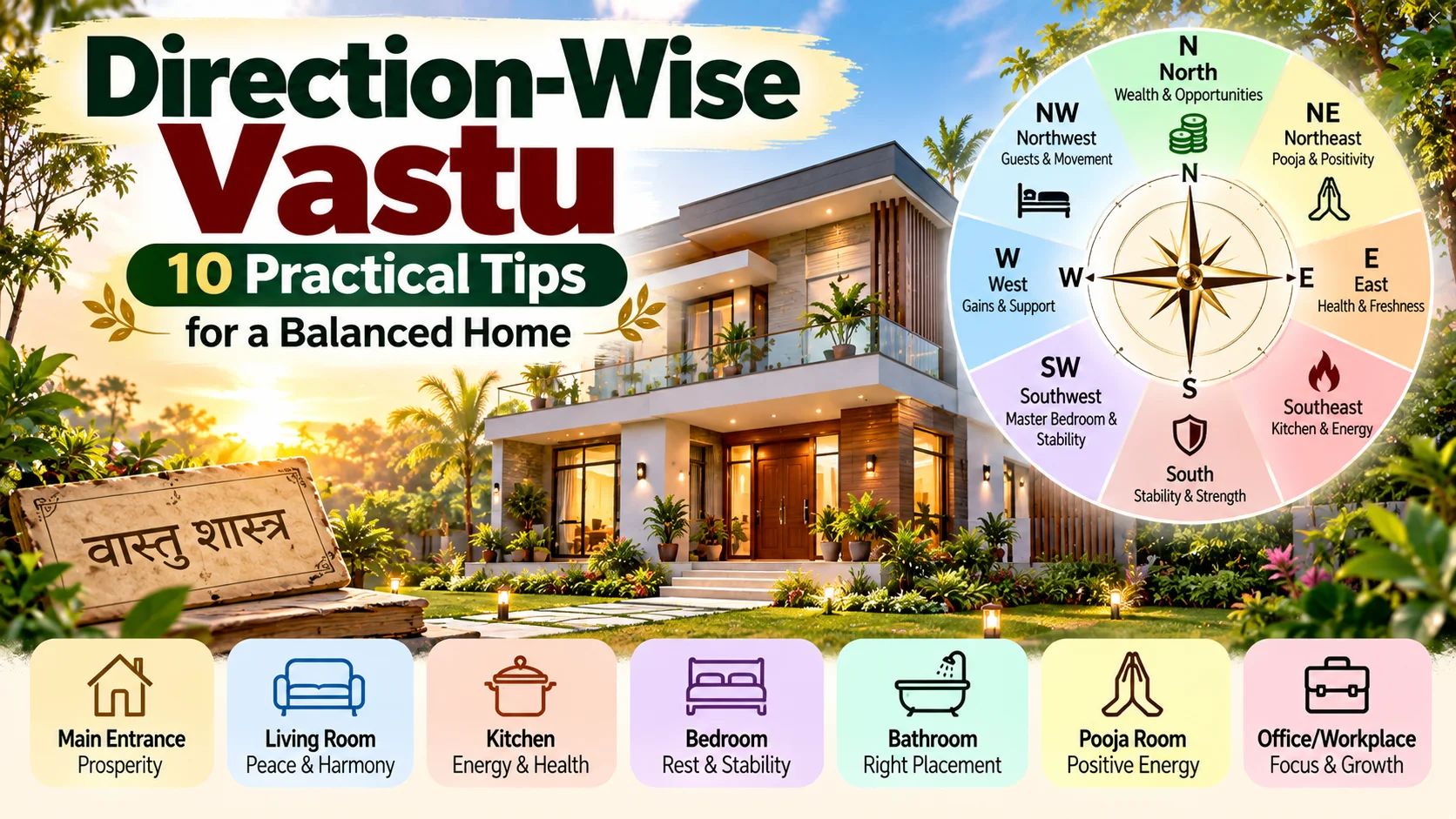
Direction-Wise Vastu explains how different parts of a home are traditionally associated with the four main directions and the five elements. It is often used when planning room placement, entrances, furniture and everyday spaces.
Vastu is a traditional system, so its recommendations are best understood as cultural and design practices rather than guaranteed methods for improving health, wealth or personal outcomes. Practical factors such as light, ventilation, comfort and safety should also be considered.
What Is Direction-Wise Vastu?
Direction-Wise Vastu focuses on how the north, south, east and west areas of a property are used. Traditional Vastu also gives importance to northeast, southeast, southwest and northwest zones.
The idea is to assign suitable activities to different parts of the home while maintaining a clean, comfortable and organised environment.
1. Understand the North Direction
The north is traditionally associated with wealth and opportunities. Many Vastu practices suggest keeping this part of the home reasonably open and well maintained.
- Keep the north area clean and uncluttered.
- Avoid unnecessary heavy storage where possible.
- Use suitable lighting and ventilation.
- Keep important areas easy to access and organised.
2. Keep the East Bright and Open
The east is traditionally connected with the rising sun and is often considered a favourable area for light, activity and freshness.
- Allow natural light into the east side where practical.
- Avoid blocking windows or important openings.
- Keep this area clean and easy to use.
- A living room or entrance may be planned here depending on the complete layout.
3. Use the South for Stable Spaces
Traditional Vastu associates the south with stability and strength. Bedrooms and heavier furniture are often placed towards the south or southwest depending on the house plan.
- Use stable and practical furniture arrangements.
- Avoid unnecessary clutter near doors and windows.
- Consider heat and ventilation when planning south-facing rooms.
4. Keep the West Organised
The west is traditionally associated with gains, completion and stability. A well-organised west side can also make storage and daily movement easier.
- Keep storage areas neat and easy to maintain.
- Use neutral or comfortable colours where suitable.
- Avoid blocking ventilation or natural light.
5. Pay Attention to the Northeast
The northeast, or Ishan zone, is traditionally considered a light and spiritually important part of the home. It is commonly recommended for prayer, meditation or open space.
- Keep the northeast clean and relatively open.
- Avoid unnecessary heavy storage.
- Use this area for quiet activities when practical.
- Maintain good natural light and cleanliness.
6. Plan the Southeast Carefully
The southeast is traditionally connected with the fire element and is commonly preferred for the kitchen.
- The kitchen is traditionally placed in the southeast.
- Keep cooking appliances safely arranged.
- Provide proper exhaust and ventilation.
- Keep the cooking and washing areas organised.
7. Use the Southwest for Stability
The southwest is traditionally considered a stable zone and is often recommended for the master bedroom or heavier furniture.
- Place stable furniture in this area where practical.
- Keep the bedroom comfortable, quiet and well maintained.
- Avoid filling the room with unnecessary objects.
8. Consider the Northwest for Movement
The northwest is traditionally associated with movement and change. It is often considered suitable for areas that are used temporarily or for guests.
- A guest bedroom can be considered in this zone.
- Keep doors and windows free from obstruction.
- Maintain good airflow and practical furniture placement.
9. Keep the Centre of the Home Uncluttered
The centre of a house is traditionally known as the Brahmasthan. Many Vastu practices recommend keeping this area relatively open and free from unnecessary heavy structures.
From a practical perspective, an uncluttered centre can also make movement through the home easier.
10. Match Vastu With Practical Home Design
Following directions alone does not make a home comfortable. Natural light, ventilation, privacy, safe electrical work, proper drainage and furniture placement are equally important.
- Prioritise good airflow and daylight.
- Keep kitchens and bathrooms dry and well ventilated.
- Arrange furniture for safe and easy movement.
- Do not make expensive structural changes only because of fear.
- Adapt traditional Vastu ideas to your actual floor plan and lifestyle.
Direction-Wise Vastu for the Main Entrance
Traditional Vastu often gives preference to north, east or northeast entrances, but the direction of a door alone does not determine whether a home is good or bad.
Keep the entrance clean, well lit and free from broken items, waste and unnecessary obstruction. The door should open and close comfortably and the entry path should remain safe.
Direction-Wise Vastu for Different Rooms
Many people use directional Vastu when deciding where to place important rooms. These are traditional preferences and should be considered alongside the complete house plan.
- Bedroom: Southwest is commonly preferred for the master bedroom.
- Kitchen: Southeast is traditionally preferred.
- Pooja Room: Northeast is commonly suggested.
- Living Room: North or east may be considered depending on the layout.
- Bathroom: Northwest or west is commonly mentioned in traditional Vastu.
Simple Direction-Wise Vastu Practices
You do not need major renovation to apply basic Vastu ideas. Start with improvements that are practical for everyday living.
- Remove unused and broken items.
- Keep important directions clean and organised.
- Improve natural light where possible.
- Maintain proper ventilation.
- Keep furniture arranged for comfort and easy movement.
FAQs About Direction-Wise Vastu
Here are some common questions about using directions in Vastu Shastra.
Which direction is considered important for wealth?
The north is traditionally associated with wealth and financial opportunities. Keeping this area clean and organised is a commonly followed practice.
Which direction is preferred for a master bedroom?
The southwest is traditionally preferred for a master bedroom because it is associated with stability.
Which direction is best for a kitchen?
The southeast is traditionally preferred for the kitchen. The final choice should also consider ventilation, plumbing and the actual floor plan.
Is northeast the best direction for a pooja room?
Yes, the northeast is traditionally considered a suitable location for a pooja room or meditation space.
Does a wrong direction automatically make a house bad?
No. A house should not be judged on one direction alone. The complete layout, natural light, ventilation, safety, comfort and how the space is used are also important.
Direction-Wise Vastu can be used as a traditional framework for thinking about room placement and spatial arrangement. The most practical approach is to combine these ideas with good planning, natural light, ventilation, safety and the real needs of the people living in the home.
1 thought on “Direction-Wise Vastu: 10 Practical Tips for a Balanced Home”